Good news, and a new approach

Exciting news has arrived for the London-based production team on The Beachcomber as we received confirmation that our developed film stock is on its way back from the lab in Germany. After a three-week wait in which much has been discussed on the creative front, this has provided a welcome opportunity to give an update, and talk about some other exciting changes happening over the rest of 2017.

Firstly, as you may already have noticed, I have decided to get a bit more involved in my post-writing. Those of you who know me or have worked with me will know that I spend a lot of my days working as a lawyer. Having this space to discuss ideas, debate issues and share our team’s news is an incredibly welcome part of my creative life, and I have decided to make it a little more personal to reflect that. This is the fiftieth post on the blog, which I think offers a perfect opportunity for a change.

By way of an update on The Beachcomber, Ashley and I followed a lovely morning at Columbia Road recently with a long discussion about how we were going to approach the editing process, the best ways to work with the sensitive and organic-feeling raw footage, and what our objectives were in making the cut. This was interesting to consider as a novice to working with film stock; previously, my approach to a digital edit was like a series of ever-tightening concentric circles, each bringing us close to a final concept. We have kept that notion in some respects: our edit plan here will be to treat the first cut as a simple assembly but, while in the digital world that would be an admission that it required relatively less effort, with the ability to physically move around our film stock we are excited to be approaching it as the potential place for a complete retelling of the story. Then will come a finer cut, based on performance, where the cutting table will become the site of more typical directorial decisions. Lastly, the final cut to sharpen and hone the overall aesthetic.

I am really looking forward to screening this film for the first time alongside its soundtrack. Again by virtue of shooting on Super 8, we have an entirely separate sound process and decided to embrace that with a single, all-consuming soundscape running throughout the film. Taken with the footage, this should be mesmerising, and hopefully quite haunting too. While I don’t wish to spoil the surprise, we developed the idea some months ago but its overwhelming effect was pushed home – aptly enough – when Lily and I saw the fantastic Woolf Works at the Royal Opera House. I can’t wait to see its effect on the audiences at our two screenings in London and Oxford this summer.

As well as this film, keep your eyes peeled for news of upcoming film and theatre productions, screenwriting projects, Edinburgh festival talk and the first previews of our new media venture, all coming soon.

Save

Radcliffe Camera this winter

clapperboard-banner

Since it has been a few months since our last update here, I thought I would use the opportunity to add a personal post, and take stock of all the changes and new projects that 2016 has brought. The most significant step in the growth of Radcliffe Camera Pictures has been my move to London, and I’m looking forward to the opportunities the city has to offer – including the opportunity to reconnect with old teammates such as Ashley Hughes (Tantamount to Treason, Red Ribbon, James), who (proving that it is indeed a small world) now lives not far from my new place.

On the subject of previous colleagues, it was nice to hear of the successes of my former Revue colleagues Barney Fishwick and Will Hislop this year, in their reincarnation as The Giants. Their shows in Edinburgh and London went down very well, and I look forward to catching up with them soon. I also recently heard that Luke Howarth (director of Othello) is involved in new-writing theatre project In the Pink at Hoxton’s The Courtyard this winter under the direction of Emma Brand (Plenty), which is incredibly exciting news.

In terms of film projects on the cards, many will have seen The Night Manager (and if you haven’t, you should), which has inspired a return to ideas for Tantamount to Treason. The relaunch of this project has been in the pipeline for a long time – it is something which we keep coming back to as a group, but which is tough to take the plunge on. If we do move forward on a web-series or longer film in the spring, it will take all the lessons learned from previous productions (including the original short film) to put together a great project. We are starting to feel ready to return to the drafting board to move the new script forward. Certainly the world of Tantamount needs to grow in size, mostly internally: there are characters to be fleshed out and new relationships to be highlighted. The key challenge will be in avoiding clichés, which arise most often when writers tack on extra material as nothing more than an expansion of the plot. We’re very keen to be pressing ahead on this front soon as part of our expansion into action dramas. In other genres, we are looking at two potential novel adaptations for the end of 2017, and possible travel-based filmmaking over the summer and into the autumn.

We are also excited to be announcing a new series of Super 8 film projects for the spring: final meetings are being held this week, and more details will be published very soon.

Watch this space.

New Year celebrations

Jerusalem6

At the end of another year of theatre and film projects, New Year’s Eve seems a good time to step back at tally up the work done by the team throughout 2015.

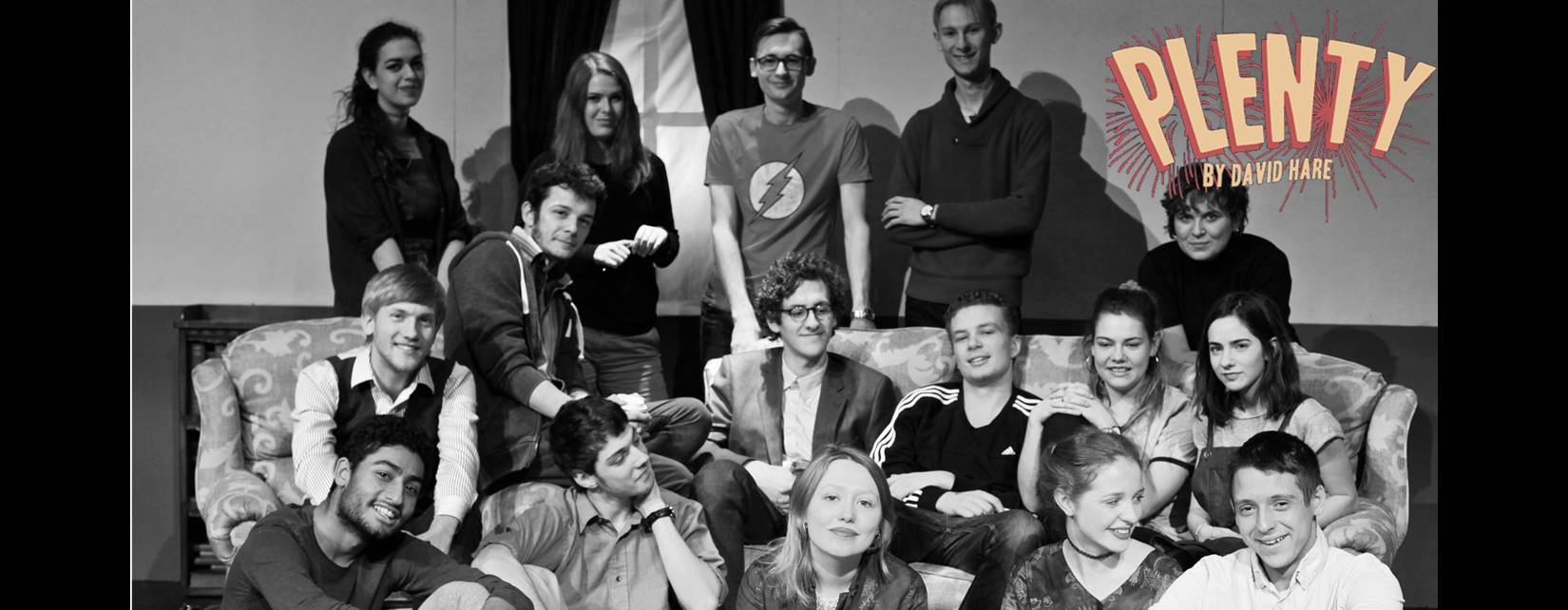
Plenty
The first theatre project of the year, and the team’s last in Oxford’s 168-seat O’Reilly Theatre, was David Hare’s mesmerising Plenty, a tale of war and mental illness, female strength and the fight to repair broken homes. Directed by Luke Howarth – one of our guest writers in January – and with a stellar cast, the show was an all-round success and a bright start to 2015.

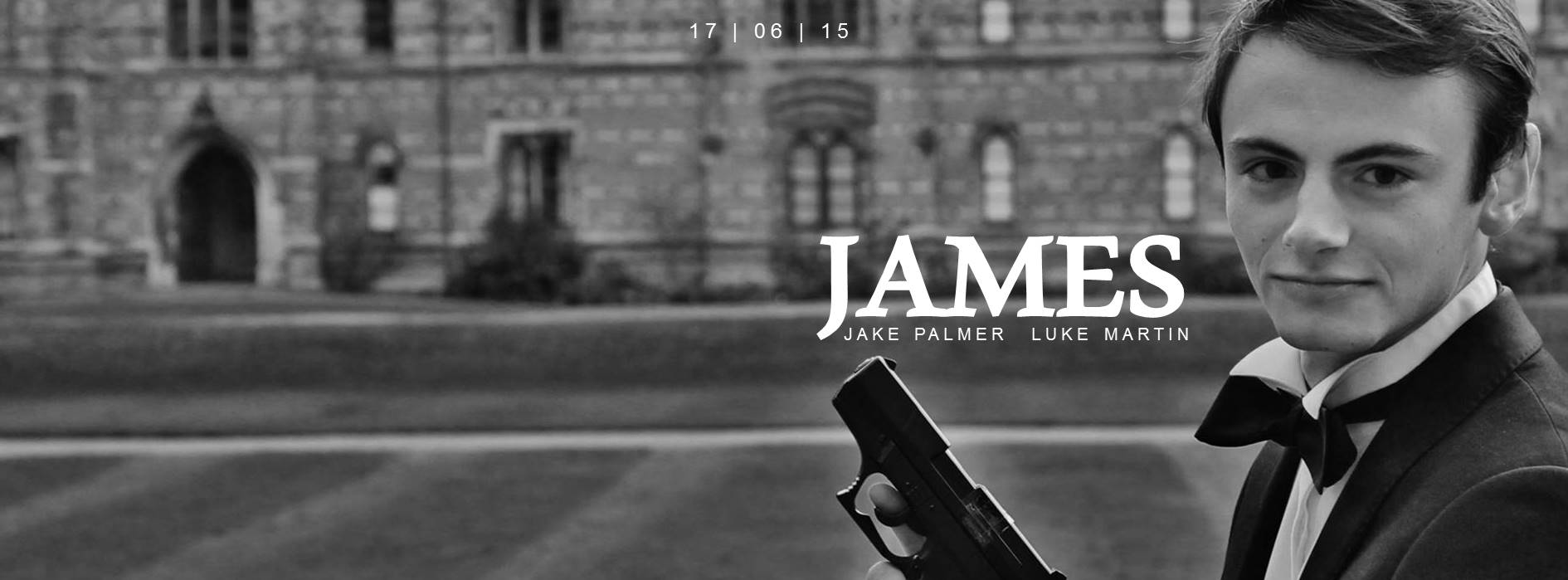
James
Featuring a tight schedule, a super-low budget and a cast all making their debut acting appearances, James was a triumph of filmmaking determination under the direction of Lily Taylor and starring Jake Palmer in the title role of a pre-heroic James Bond. Described in our posts as a project with ‘a fun attitude yet a serious agenda’, the film is accompanied by an original score from Tom Kinsella, and enjoyed a well-attended premiere screening at Keble College once the summer’s exams were over.

The Norman Conquests
In early summer, attention turned to a project hoping to transfer from Oxford’s 800-seat Playhouse to the Edinburgh Festival Fringe under the watchful eye of veteran director Griff Rees: an ambitious rotating production of Alan Ayckbourn’s Norman Conquests trilogy. I was glad to be able to provide advice on the transition – although sadly unable to produce for them up in Edinburgh. Seeing their marketing and production teams around Edinburgh was, however, a real treat.

The Oxford Revue’s Issues
Taking the Fringe’s thriving comedy sector by storm, The Oxford Revue’s show Issues provided an amazing opportunity to produce a big show up in Edinburgh. Investing large amounts of funding to secure accommodation, the impressive 180+ seat Assembly Studio Two venue, and all the associated expenses of maintaining a twelve-person comedy team up in the city for the summer, all paid dividends with sell-out audiences, excellent reviews, and wonderful successes too for the Revue’s other projects. After that success, the stage is set for another fantastic trip next year; look out for Revue president Jack Chisnall’s plans for the summer in a guest post soon.

Citric Acid
We recently heard technician-turned-playwright Mina Odile write about the challenges of ‘new-writing comedy’, but it was an exciting pleasure to put on Citric Acid at the BT Studio, selling out several nights and delivering cutting, intriguing and oftentimes immersive satire to audiences each night. Exploring the absurdism of postgraduate life in the trendier areas of London, a theme which must have resonated with a large number of student audience members, the show gave welcome variety to the theatre portfolios of the Hexagon/Commensal teammates involved, and was a successful launch of the new Koma Kino theatre company under director Josh Dolphin.

Guest posts
And in the past few weeks, we’ve already heard from four of our fantastic guest writers – Tom Kinsella, composer to James, central figures in the Commensal and Hexagon theatre teams Mina Odile and Alex Grew, and theatre photographer Ollie Robinson. Four more guests are still to come next month, including figures from theatre and film projects across the past year, and into the next. Keep an eye out for their posts in our Comment section.

2016
Looking forward, there are big projects on the horizon accompanying the move to London in a couple of weeks’ time. A dozen very short, no-budget films are proposed for the Radcliffe Camera Pictures portfolio over the first half of 2016, ranging in theme and style from period costume dramas to art-centric social experiments, Shakespeare adaptations to Woolf classics. On the writing side of things, progress begins with former Revue colleagues on two comedy screenplays for television, while the newly redrafted Tantamount to Treason web-series becomes the focus of a search for investment and a production team able to realise its potential. On the stage, initial enquiries continue on a major adaptation project – currently under wraps – in collaboration with Citric Acid playwright Alex Newton, hopefully set for London later this year.

As we look forward to this exciting news, all on the Commensal, Hexagon, Koma Kino and Radcliffe Camera teams wish you a very happy New Year!

Ultra-high expectations, ultra-low budgets

by Commensal & Hexagon technical director Alex Grew

Jerusalem set

So much of an audience’s perception of a play comes from what they see, and often this begins and ends with the set. A good set can leave the audience feeling happy with a production and give a sense of professionalism, when even fantastic acting cannot fully ameliorate the negative effects of a bad set on the mood of a crowd spilling into the theatre. Set-building is also not without its challenges, of which I’ve seen my fair share, from laying fifty metres of turf in the theatre to constructing a dozen flats in its foyer.

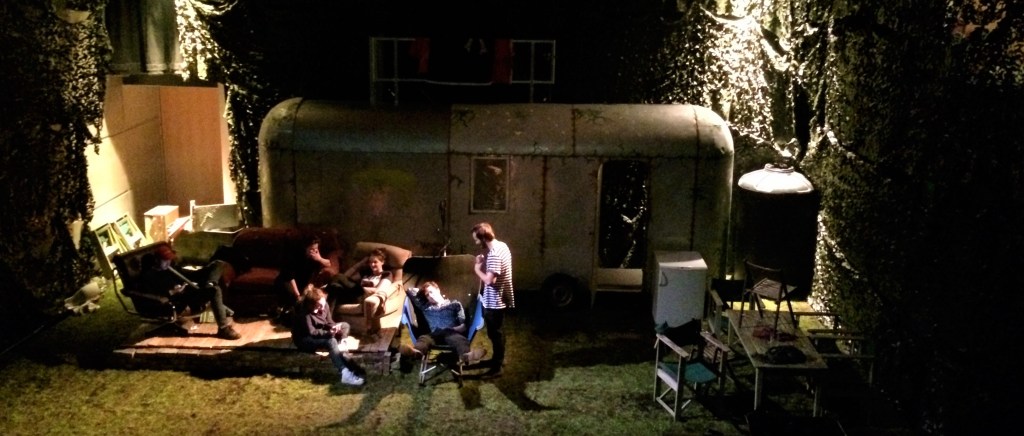
Whilst actors have weeks to rehearse and perfect their parts, the technical team have only a few days to completely transform a venue, and therefore time can be the biggest challenge in set construction. Keeping things simple-to-construct is key, however this does not necessarily mean a simple set. In our production of Jez Butterworth’s Jerusalem, the challenge was in making a set that looked busy and complex but remained relatively simple to construct – with the exception of laying turf into the early hours of the morning – as the majority of the set pieces were created from existing pieces of garden furniture. The major challenge, though, came in putting together a full-sized aluminium caravan in just a few hours, and steel erection has become one of the team’s specialities in putting up large set pieces in a very short period of time.

Sticking within a tight budget encourages simple design, but sometimes you just have to get creative to save money, and this is where the fun begins. To create an old street lamp for Plenty, we attached a cheap house light to a spray-painted scaffold pole, and for ’Tis Pity we raided several members of the production team’s rooms for bookcases and cabinets, as well as borrowing sofas from a college bar.

However great a set concept is, the difficulty is always making it a reality, and in my experience constructing set pieces – particularly large flats and steel platforms – is where things get tricky. The main reason for this is simply finding construction space, especially in student venues. In very few theatres do you have access to a workshop, and living in shared accommodation makes finding somewhere to construct quite difficult, especially in the otherwise tranquil buildings of Oxford. During the construction of the set for Plenty, Andrew and I ended up constructing flats and painting panels around the outside of the theatre in an attempt to find enough space to build such a large number of wooden pieces in very few days, and with no storage besides the stage itself. At one point we had flats in both levels of the theatre foyer as well as in every empty space we could find within the theatre – it was at this point that cast members of another show arrived, and we realised that a matinée performance was beginning in under an hour. The frantic carrying of semi-dry wooden flats up multiple flights of stairs led us to a seminar room, which was subsequently filled with flats and construction materials.

As silly as it sounds, set building is most fun not when it goes right, but when it goes wrong, with the solutions to many problems providing many amusing stories.

With experience building iconic sets in tiny studios – the eerie white ribs and suspended portholes of Endgame in the BT Studio, for example – and wildly ambitious sets for the 180-seat O’Reilly – such as the forest clearing and caravan of Jerusalem and the flying tree of Plenty – Alex was a key member of the technical teams on Endgame, ’Tis Pity, Othello, Jerusalem, Plenty and Citric Acid.

The challenge of shooting theatre

by theatre photographer, Ollie Robinson

Tis Pity

Theatre photography above all else lures you in. A meticulously constructed environment, designed specifically to be seen, populated by thespians keen for (let’s admit) edgy social media glory. Theatre work is nowhere near as frustrating as capturing the split-second glory in sports, or avoiding the spilled Jägerbombs at events. But still, the stage is a mixed bag. I could even talk about the times I dodged pyrotechnics, or the shrapnel from an exploding mug, but I don’t like to be called a hero…

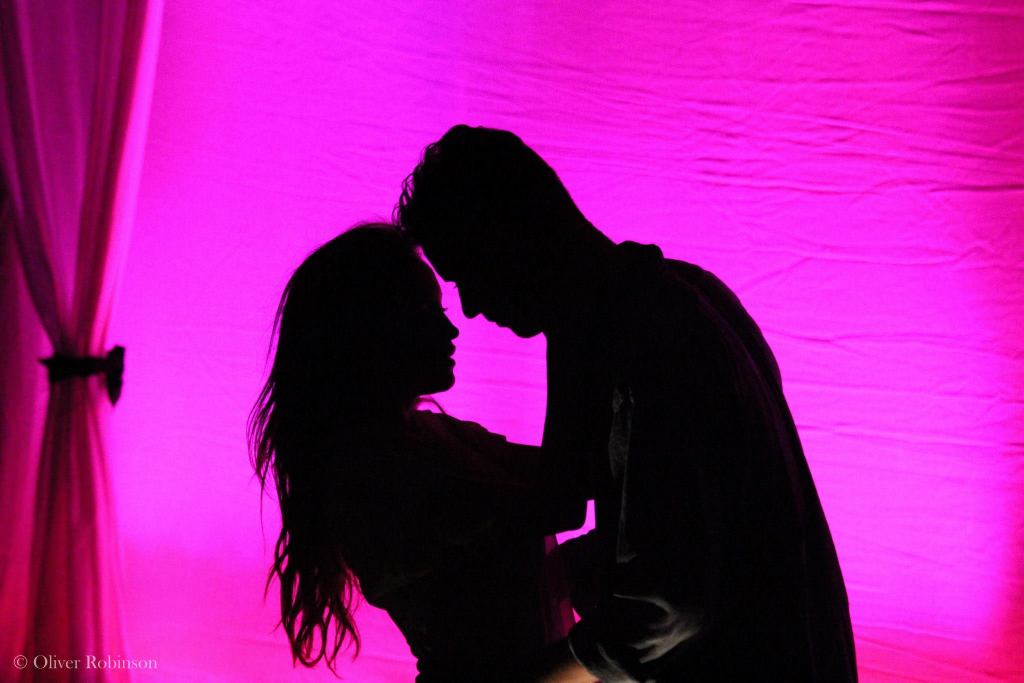
Time is the first illusion. Shooting an hour long play should fit in easily around all the other work I definitely should have already done, but a dress rehearsal running on time has yet to be documented. So it helps to either to have the virtue of patience, or to have already started that essay on the virtues of Plato due at the same time. Light is almost as unpredictable, since without flash most cameras give up, especially when the actors are lost in darkness or swallowed by blinding psychedelic pink. The miracle of a wide aperture prime lens is something I learned one play too late, since actors staying motionless long enough not to blur is uncommon in a play most likely to be about sex and stabbing. But when the camera sensors can pick up enough light, theatre shots can turn out some of the best, having dramatic illumination while being more dynamic than the poses of fashion photography.

The theatre experience itself is surprisingly enjoyable through a lens. The nearness of the actors makes it easy to get absorbed: several captivated minutes have definitely passed when I was just watching through the viewfinder without remembering to actually take pictures. Pretending to be professional in a student environment also gives a welcome excuse to creep further onto stage. Getting in close gives a flexibility of perspective and raw pixel quality that can set photos apart, although it’s still unknown whether the actors’ lack of complaints is from their professionalism or for their love of a good profile picture.

But even with the occasional challenges, theatre photography is a great way to hone the skill of managing extremes of light, while still feeling the atmosphere of an excellent performance. Even when the actors share your photos with added speech bubbles: who says culture is dead?

Ollie was production photographer for Commensal’s ’Tis Pity and Jerusalem, as well as Hexagon Theatre’s Othello and Plenty, and starred in the RadCam Pictures film James. He earned a degree in Philosophy and Theology from the University of Oxford at the same time, and his services can be found at www.oliverrobinsonphotography.com.

Radcliffe Camera Pictures established

Radcam board

The production group behind James, Radcliffe Camera Pictures, becomes officially established today as papers are filed with Companies House to complete its registration. Although the theatre teams Commensal, Hexagon and Koma Kino – under whose umbrellas a half dozen recent plays operated – are both registered societies, this film-centred organisation becomes the first in our Creative Venture portfolio to be fully registered as a company.

From a commercial point of view, company registration brings a number of benefits, including easier access to insurance facilities, eligibility for a wider range of funding sources and grant opportunities, and a legal personality capable of protecting its staff and intellectual property. It also gives the chance for a fresh start from an organisational perspective, and producer Andrew Hall intends to be much clearer about divisions and sections within this new business, creating space for greater accountability, efficiency and results. An example is the company’s writing programme, which remains in character a working group of flexible membership, but can now set a clear agenda under the company umbrella, while RadCam pursues its own productions and development on alternative media projects without infringing on its writing staff.

Working groups are key to the new company structure and ethos, and although the overall brand is committed to a focus on film for the present, this structure also allows plenty of scope for continued support of theatre ventures, especially as the newly-created Koma Kino (Citric Acid) means the team retain a foothold in the Oxford theatre scene despite a central move to London. Within RadCam, groups are dedicated to new writing, television projects, film production and community ideas; each group has a rotating chairperson and a flexible staff, with funding applications made on behalf of each group by the central company. Since so much of the team’s current work can be undertaken remotely (rewriting Tantamount to Treason, Koma Kino plays in Oxford and new Revue projects) this system also allows for easy recruitment of new talent and regular rearrangement of personnel depending on shifting projects.

With four writing projects soon to be announced, a web-series, a short film and a major theatre project all on the company’s books for spring 2016, everyone at Radcliffe Camera Pictures is excited for the New Year.

Introducing guest posts

plenty team

Ahead of some new announcements for our production company Radcliffe Camera Pictures, we have decided to move towards the New Year with a change to the regular news pieces on the website. Alongside updates on all of our current projects, we’re excited to have seven new guest posts from colleagues in theatre and film on issues relevant to the industry today, as well as the experiences and challenges they have encountered on recent productions. We have already heard from Tom Kinsella, composer for James, on the challenges of reinventing and adapting the incredible James Bond source material to create a fresh film soundtrack, and this series plans to focus on different aspects of the creative process too. Featuring seasoned theatre photographer Ollie Robinson, the writers of new stage comedy Citric Acid and crew members from film and theatre sets of recent years, we hope you’ll find these posts an interesting take on creative life. Among the first in the series will be Mina Odile, co-writer of Citric Acid and technical director/lighting designer on Endgame, Othello, Plenty, Jerusalem and ’Tis Pity, in a little over two weeks.

In the meantime, take a look at the rest of our Comment pieces here.

Student drama: three pointers for beginners

Coalition banner

A couple of weeks ago, the university-wide Drama Cuppers Festival once again catapulted fifty teams of freshers interested in theatre onto the stage at Oxford’s BT Studio, with three weeks’ preparation and fifty pounds to put on their shows. All that theatre fervour reminded me of my first experience with student drama, as our team took Robert Khan and Tom Salinsky’s Coalition fresh from the Edinburgh Fringe to the Oxford stage in November 2012. The experience threw together the teammates who would eventually start the Commensal and Hexagon theatre companies, and go on to produce Endgame, ’Tis Pity, Othello, Jerusalem, Plenty and Citric Acid. Graduating university and leaving behind such a close drama community, I thought it was a good time to look at some of the advice which most benefited us as student thesps, and what has gone on to benefit us after graduation.

Get involved in every project that comes along

Depending on your subject, it can sometimes be a struggle simply to deal with your course-load. Nonetheless, university is one of the only periods in your career where it is acceptable to juggle as many projects as you can handle, and not face trouble if you drop one. With that in mind, seize every offer of collaboration that comes your way. Most university cities will be filled with theatres taking productions of varying size and ambit, perfect for giving you experience in leading roles for some projects, and helping at the fringes of others. Networking and variety are key to a successful theatre career: be nice to everyone (it really isn’t difficult) from the directors and producers to the casts and the technical crews, and you will find a steady stream of gigs being sent your way.

The group who put together Coalition went on to produce six more projects through close friendships and mutual respect – show that you’re keen to work hard in a variety of roles, and people will want to work with you on their next idea. The other benefit to taking small positions on a range of shows is that you’ll soon be in a position to bring like-minded people together for new projects, putting you into more serious roles on new-writing plays (like Citric Acid) or invitations to join tours (Issues) and innovative plays in new spaces (like Othello). You also get the benefit not only of front-row seats to every show in town, but to see leading actors develop their own careers on your productions over time, and that is a great reason to be in theatre.

Start an independent brand

As Barry Saltzman pointed out in a recent article for Fast Company, “personal branding is essential to career success”. He argues that maintaining a personal brand encourages you to defend your now-public reputation through continued success, and motivates you to chase increasingly high standards as you watch your brand stand up against others. During the development phase for Endgame, it was director Will Felton who established his Commensal Theatre brand, an umbrella which covered myself as producer, and our technical director Sean Ford. The group evolved as new projects retained the same teams, consistently seeing production manager Eshan Shah and technicians Mina Odile and Alex Grew come aboard from ’Tis Pity through to Jerusalem. Bringing these core skill areas in-house led to an atmosphere of commitment to the team, and to the shows we were delivering. We found ourselves pushing the fold creatively and technically, both with regard to the type of material we decided to tackle, the sets we were creating, the effects we were applying and, ultimately, the audiences we were receiving.

It is well worth setting up a new production company, even with the smallest project you manage. Josh Dolphin, director of Citric Acid, channelled the profits from the show into a portfolio for his new brand Koma Kino, and is now looking to deliver a series of comedies and dramas at the BT Studio in Oxford throughout the next year. The importance of setting up a company is often overlooked in student drama, most often because it is seen simply as a source of funding, or is considered irrelevant because that funding comes from elsewhere. Yet as experience and research makes clear, a company is about branding as much as business, and a lot of progress can be made with the motivation that a brand gives you.

Work with directors who demand the impossible

The most important thing I realised during my work in student theatre was something pointed out one day by our technical director, Sean Ford: you need to find a director who demands the impossible. Within the environment of a well-motivated theatre company, everyone should be encouraged to aim for professional standard – you will be surprised at the extent to which money (of which you will have surprisingly little) can be replaced by effort and willpower. Particularly in student theatre, where there are no unions and everyone is balancing the production with their degree work, long and unusual hours are the norm, but a can-do attitude is all that is necessary for success. Our production manager on ’Tis Pity worked a couple of sixteen hour days immediately before the show opened, and his work made a huge impact on the success of the show – naturally, everyone involved wanted to collaborate again.

The director is, at the end of the day, often the person with the most to lose on a production. However, appeasing their desire for the impossible is nothing to do with massaging their ego. Wherever you stand within a production team, make your own association with the project the source of your motivation to see it succeed. Whether you end up turfing stages, building trees, serving lemonade, hanging portholes from ceilings or transporting a caravan across the country, realising that your director’s demands are good ideas and putting everything behind them will bring you some very successful years in student theatre.

Scoring James

by JAMES composer, Tom Kinsella

James banner

The James Bond Theme is probably the most famous piece of film music of all time. So, when Lily and Andrew asked me if I would write an original soundtrack for ‘James’ – by drawing on the rich musical language of the Bond legacy – I was absolutely terrified. The James Bond of Hollywood fame has an unforgettable sonority in our collective consciousness, but how would a young James Bond sound? As a corollary, the true challenge of this piece was in creating a soundscape that contained all the musical seeds of the James Bond series, but also remained truthful to Lily’s own vision of Bond, who appears youthful, inchoate, and at times, vulnerable (none of which are adjectives one would normally use to describe the womanizing 007).

To achieve this, I borrowed a range of tropes from John Barry (who, for those that don’t know, composed the music for eleven of the James Bond films between 1963–1987). And then, I manipulated them. Some of these tropes were obvious and irresistible – for example, utilizing a surf rock style guitar ­– and some were more technical; most of the harmony in the film is built around variations of the ‘James Bond Chord’, which, for all those music theory fanatics out there, consists of a minor triad with an added major 7th/9th.

For the opening sequence, I incorporated these features (amongst others), but veiled their presence by writing in a pop music idiom. Why? The Bond we observe in this film is a young, somewhat ordinary student who works in the library, goes to the pub and isn’t great at flirting – he’s definitely more Katy Perry than he is Prokofiev. By way of contrast, omens that point towards the future of James’ character, in addition to moments like the fight scene, gave me a chance to explore the darker, more visceral side of Bond’s music, and pay homage to more recent works, like Thomas Newman’s soundtrack for ‘Skyfall’.

Overall, my aim for the film was for its music to synthesize and flit between the old and the new – contemporary Bond, and his younger self. In a broader sense, I guess my attraction to Lily’s James is that he encompasses something we can all somehow relate to; he is a nascent character, transitioning between his teenage years and adulthood, yearning to find himself, through a prism of insecurity – yet all the while possessing a glimmer of his future self. I’ve tried my best for my composition to emulate this; to be honest, I’m still terrified. But after all, what would a Bond film be without a bit of tension, fear and a large dose of excitement?