That’s a wrap on The Beachcomber

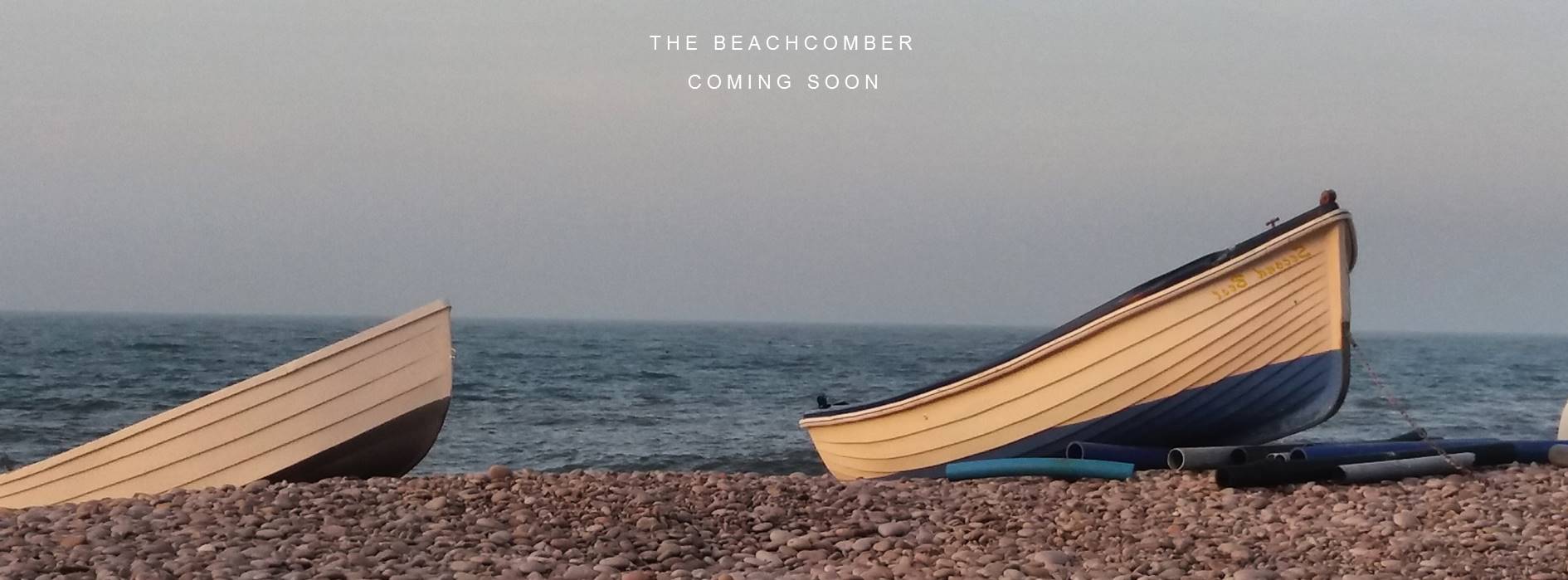
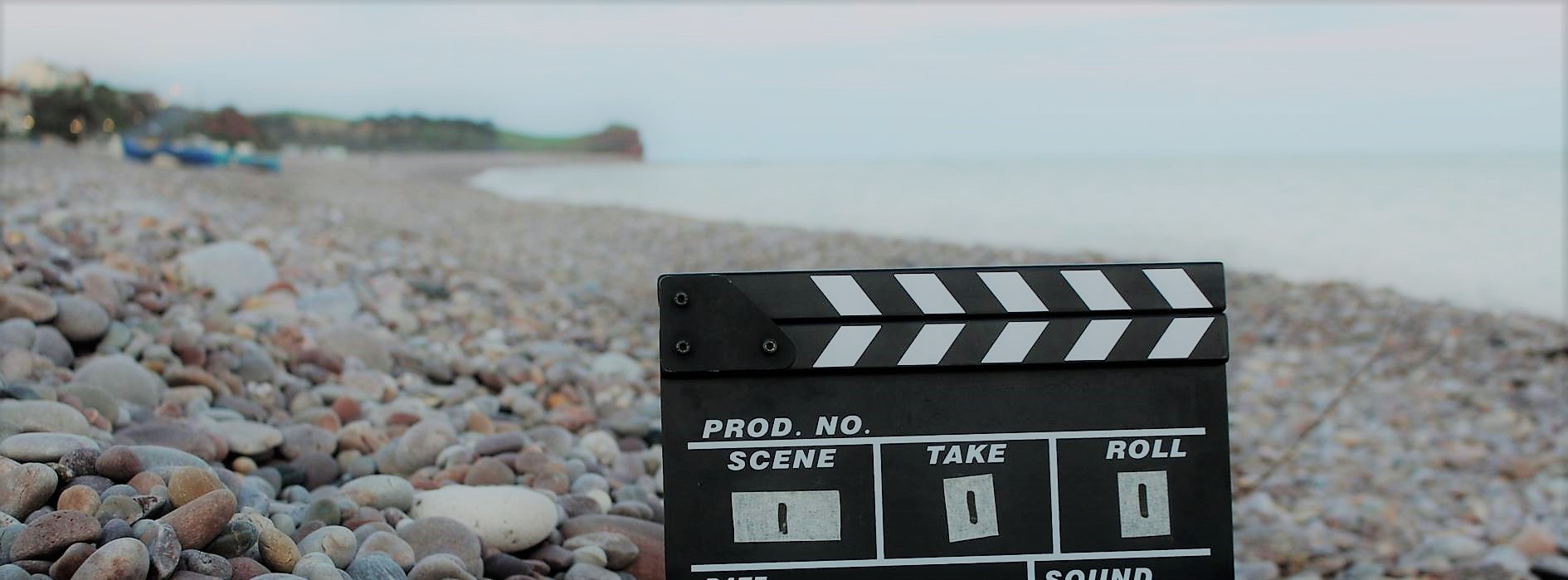
Shooting on The Beachcomber wrapped on Sunday evening in the Devon village of Budleigh Salterton, as the team completed a busy three-day schedule in time to watch a beautiful sunset over the sea.

Working on Super 8 film, DP/editor Ashley Hughes is now responsible for the processing phase of the project, with the film stock being sent to a lab in Germany for positive prints the team can use on their edit. As well as providing an opportunity to step back from the material before cutting begins, the film process leaves no room for a ‘solve it during post’ attitude on set. As a result, much more time is spent on set choosing the perfect frame and ensuring its content is precisely what is needed to move the story forward, and creative input came from each member of the team. This type of discipline is exactly what was hoped for by the trio, and means that going forward they are working to hone 26 shots, rather than the 260 which made up the library of digital footage from James.

The Beachcomber stars Lily Taylor, with cinematography by Ashley Hughes, and was produced by Andrew Hall. Screening dates in London and Oxford are slated for mid-June.

Save

Save

Shooting begins on The Beachcomber

The Radcliffe Camera Pictures director-cinematographer duo Andrew Hall and Ashley Hughes move their work to the south coast this weekend, as actor Lily Taylor follows her film debut in London Time with The Beachcomber.

Adapted from a short story of the Bloomsbury era, the film blends unforgiving English waves and the warmth of the mile-long shingle beach at Budleigh Salterton, as well as the rich imagery of the underlying text. Once again shooting on Super 8 film, the team have spent the past two months plotting and crafting the narrative, reviewing shot lists with the strict discipline that the medium demands. For a team used to the flexibility of three or four angles on a scene, and anything up to ten takes, the new art form presents a welcome challenge.

This weekend will mark the beginning of the organic filmmaking process, after which the reels will need processing and prints will be sent back to the team from their lab in Germany for manual cutting. Although a digital scan will be used to assist the composer and the editing process, and eventually for distribution, the team intend to debut their work on an 8mm projector. Screenings are being tabled for the middle of June and the team are seeing them as opportunities to build their production network. At the London preview in a Canary Wharf warehouse, the hope is that aspiring co-producers and actors will come together for an evening of ‘cinema celebration’, while the official screening in Oxford includes an evening of live music and spoken word, new artworks and photography, bringing together the creative forces the team needs for its future projects.

As ever, watch this space for more.

Filming on Super 8: London Time

london-time-banner

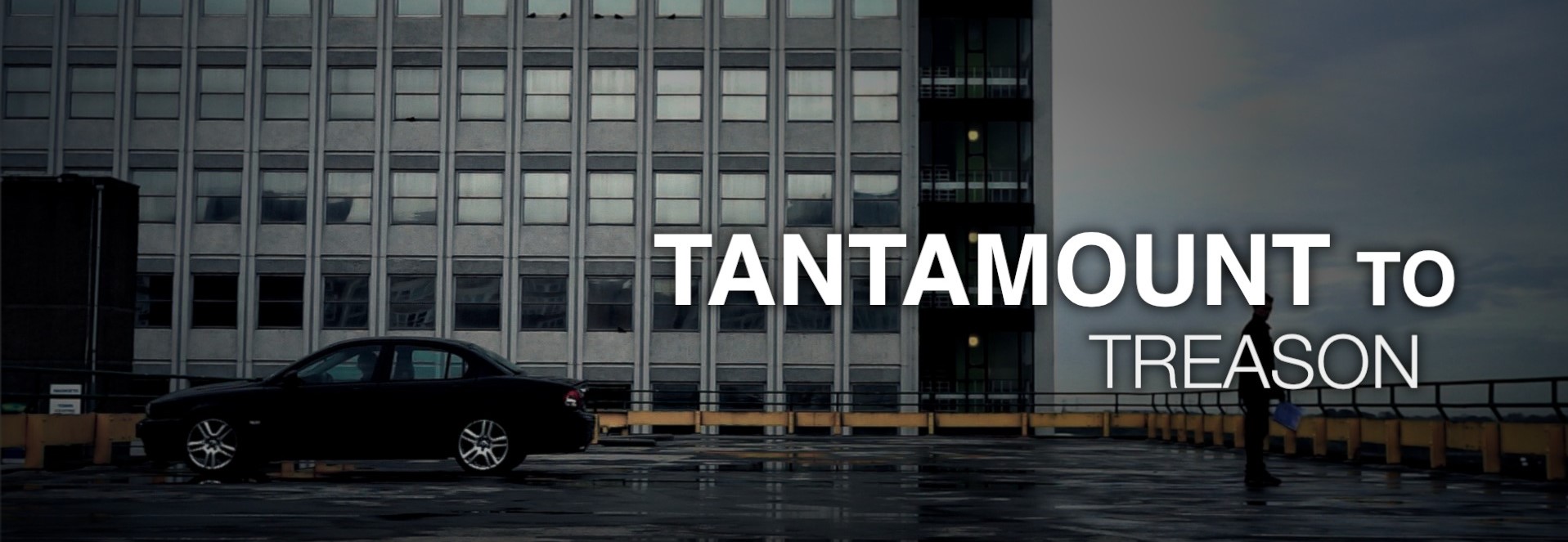
With principal photography completed last weekend, and a final pickup scheduled for this week, DP Ashley Hughes introduced the Radcliffe Camera team to Super 8 in whirlwind fashion this month, on the shooting of micro-film London Time. Intended to give the group a feel for the discipline and excitement of shooting on real film, the project brought together actors Lily Taylor (Plenty) and James Dadford onscreen, with Andrew Hall directing and Ashley (whose collaborations to date include Tantamount to Treason, Red Ribbon | Blue Suit, Beauty & Acceptance and James) in charge of cinematography. Notably, the short project also marked the five-year anniversary of the pair’s debut project, Tantamount to Treason, being accepted into its first film festival.

The bleak winter weather that has plagued London over the past month gave way to beautiful sunshine as the team’s vintage Super 8 camera took in the architecture of London’s Canary Wharf. Moving forward, Ashley is relying on his previous experience with the medium to show the team the development and editing processes, and a finished cut is expected at the end of February.

All of this builds up to the thrilling formal launch of The Beachcomber, coming later this month.

Announcing: The Beachcomber

In March next year, Radcliffe Camera will be stepping out of London and heading to the coast for The Beachcomber, a collaboration with cinematographer Ashley Hughes (Tantamount, Red Ribbon) and Lily Taylor (James) and the team’s first project to be shot on Super 8 film.

“Shooting on film will present a whole range of new challenges for the team”, the group agree. It will be an interesting collaboration for Ashley, who has worked with the medium on a number of previous projects. As Andrew, producer of The Beachcomber, notes, “in previous collaborations, with a digital setup, we have had the flexibility to shoot six or ten takes of every angle where necessary. On this project, the aim is to capture everything first time and more-or-less in order. This will minimise editing time, and mean that we can take the finished reel almost straight from the camera and say ‘This is our film’ at the end of it.  We’re going to benefit hugely from Ashley’s experience to help us understand what is required when working with 8mm.” Before any work commences on The Beachcomber, Ashley and Andrew are in discussions for another short project using film in January, to get the team ready for the challenges of the process.

The Beachcomber, shot entirely on location in the Devon village of Budleigh Salterton, will be the first step towards a significant adaptation project the team is considering for late 2017. “As with every project, the hope is that the finished film is perfect,” the group say, “but especially in this format and in early spring, we’re treating it very much as an experiment.” Approaching the project in this way, the crew want to learn more about Super 8 and the discipline it instills on set, and are keen to revisit the source material again later next year.

“This is the first time we’ve tried to capture the surreality and vividness of the south coast on camera, as the coastline and its inhabitants start to recover from the winter storms, after discussing it for a long time. Super 8 is absolutely the right medium to do that, but the story we are working up to is so powerful, we think it warrants so much more than a single project.”

Casting and location news, as well as details of the January project which will see the Radcliffe Camera team work on 8mm film for the first time, is coming soon.

Save

Radcliffe Camera this winter

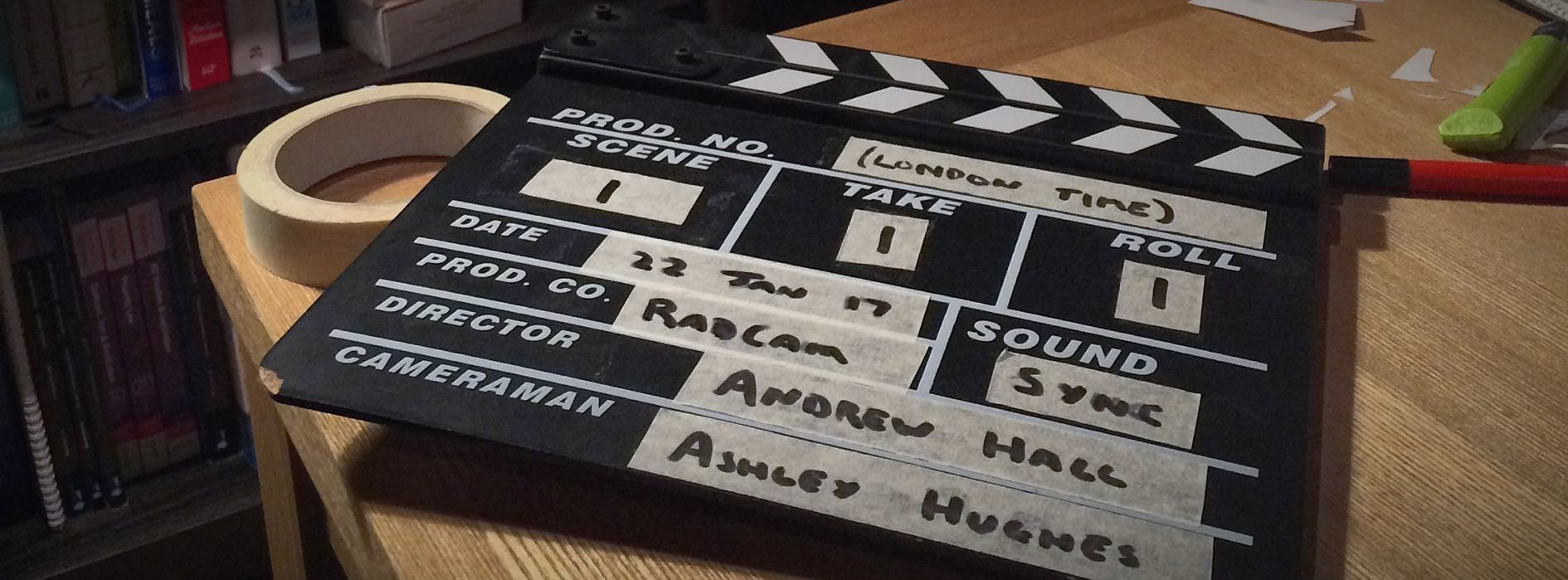
clapperboard-banner

Since it has been a few months since our last update here, I thought I would use the opportunity to add a personal post, and take stock of all the changes and new projects that 2016 has brought. The most significant step in the growth of Radcliffe Camera Pictures has been my move to London, and I’m looking forward to the opportunities the city has to offer – including the opportunity to reconnect with old teammates such as Ashley Hughes (Tantamount to Treason, Red Ribbon, James), who (proving that it is indeed a small world) now lives not far from my new place.

On the subject of previous colleagues, it was nice to hear of the successes of my former Revue colleagues Barney Fishwick and Will Hislop this year, in their reincarnation as The Giants. Their shows in Edinburgh and London went down very well, and I look forward to catching up with them soon. I also recently heard that Luke Howarth (director of Othello) is involved in new-writing theatre project In the Pink at Hoxton’s The Courtyard this winter under the direction of Emma Brand (Plenty), which is incredibly exciting news.

In terms of film projects on the cards, many will have seen The Night Manager (and if you haven’t, you should), which has inspired a return to ideas for Tantamount to Treason. The relaunch of this project has been in the pipeline for a long time – it is something which we keep coming back to as a group, but which is tough to take the plunge on. If we do move forward on a web-series or longer film in the spring, it will take all the lessons learned from previous productions (including the original short film) to put together a great project. We are starting to feel ready to return to the drafting board to move the new script forward. Certainly the world of Tantamount needs to grow in size, mostly internally: there are characters to be fleshed out and new relationships to be highlighted. The key challenge will be in avoiding clichés, which arise most often when writers tack on extra material as nothing more than an expansion of the plot. We’re very keen to be pressing ahead on this front soon as part of our expansion into action dramas. In other genres, we are looking at two potential novel adaptations for the end of 2017, and possible travel-based filmmaking over the summer and into the autumn.

We are also excited to be announcing a new series of Super 8 film projects for the spring: final meetings are being held this week, and more details will be published very soon.

Watch this space.

New Year celebrations

Jerusalem6

At the end of another year of theatre and film projects, New Year’s Eve seems a good time to step back at tally up the work done by the team throughout 2015.

Plenty
The first theatre project of the year, and the team’s last in Oxford’s 168-seat O’Reilly Theatre, was David Hare’s mesmerising Plenty, a tale of war and mental illness, female strength and the fight to repair broken homes. Directed by Luke Howarth – one of our guest writers in January – and with a stellar cast, the show was an all-round success and a bright start to 2015.

James
Featuring a tight schedule, a super-low budget and a cast all making their debut acting appearances, James was a triumph of filmmaking determination under the direction of Lily Taylor and starring Jake Palmer in the title role of a pre-heroic James Bond. Described in our posts as a project with ‘a fun attitude yet a serious agenda’, the film is accompanied by an original score from Tom Kinsella, and enjoyed a well-attended premiere screening at Keble College once the summer’s exams were over.

The Norman Conquests
In early summer, attention turned to a project hoping to transfer from Oxford’s 800-seat Playhouse to the Edinburgh Festival Fringe under the watchful eye of veteran director Griff Rees: an ambitious rotating production of Alan Ayckbourn’s Norman Conquests trilogy. I was glad to be able to provide advice on the transition – although sadly unable to produce for them up in Edinburgh. Seeing their marketing and production teams around Edinburgh was, however, a real treat.

The Oxford Revue’s Issues
Taking the Fringe’s thriving comedy sector by storm, The Oxford Revue’s show Issues provided an amazing opportunity to produce a big show up in Edinburgh. Investing large amounts of funding to secure accommodation, the impressive 180+ seat Assembly Studio Two venue, and all the associated expenses of maintaining a twelve-person comedy team up in the city for the summer, all paid dividends with sell-out audiences, excellent reviews, and wonderful successes too for the Revue’s other projects. After that success, the stage is set for another fantastic trip next year; look out for Revue president Jack Chisnall’s plans for the summer in a guest post soon.

Citric Acid
We recently heard technician-turned-playwright Mina Odile write about the challenges of ‘new-writing comedy’, but it was an exciting pleasure to put on Citric Acid at the BT Studio, selling out several nights and delivering cutting, intriguing and oftentimes immersive satire to audiences each night. Exploring the absurdism of postgraduate life in the trendier areas of London, a theme which must have resonated with a large number of student audience members, the show gave welcome variety to the theatre portfolios of the Hexagon/Commensal teammates involved, and was a successful launch of the new Koma Kino theatre company under director Josh Dolphin.

Guest posts
And in the past few weeks, we’ve already heard from four of our fantastic guest writers – Tom Kinsella, composer to James, central figures in the Commensal and Hexagon theatre teams Mina Odile and Alex Grew, and theatre photographer Ollie Robinson. Four more guests are still to come next month, including figures from theatre and film projects across the past year, and into the next. Keep an eye out for their posts in our Comment section.

2016
Looking forward, there are big projects on the horizon accompanying the move to London in a couple of weeks’ time. A dozen very short, no-budget films are proposed for the Radcliffe Camera Pictures portfolio over the first half of 2016, ranging in theme and style from period costume dramas to art-centric social experiments, Shakespeare adaptations to Woolf classics. On the writing side of things, progress begins with former Revue colleagues on two comedy screenplays for television, while the newly redrafted Tantamount to Treason web-series becomes the focus of a search for investment and a production team able to realise its potential. On the stage, initial enquiries continue on a major adaptation project – currently under wraps – in collaboration with Citric Acid playwright Alex Newton, hopefully set for London later this year.

As we look forward to this exciting news, all on the Commensal, Hexagon, Koma Kino and Radcliffe Camera teams wish you a very happy New Year!
Ultra-high expectations, ultra-low budgets

by Commensal & Hexagon technical director Alex Grew

Jerusalem set

So much of an audience’s perception of a play comes from what they see, and often this begins and ends with the set. A good set can leave the audience feeling happy with a production and give a sense of professionalism, when even fantastic acting cannot fully ameliorate the negative effects of a bad set on the mood of a crowd spilling into the theatre. Set-building is also not without its challenges, of which I’ve seen my fair share, from laying fifty metres of turf in the theatre to constructing a dozen flats in its foyer.

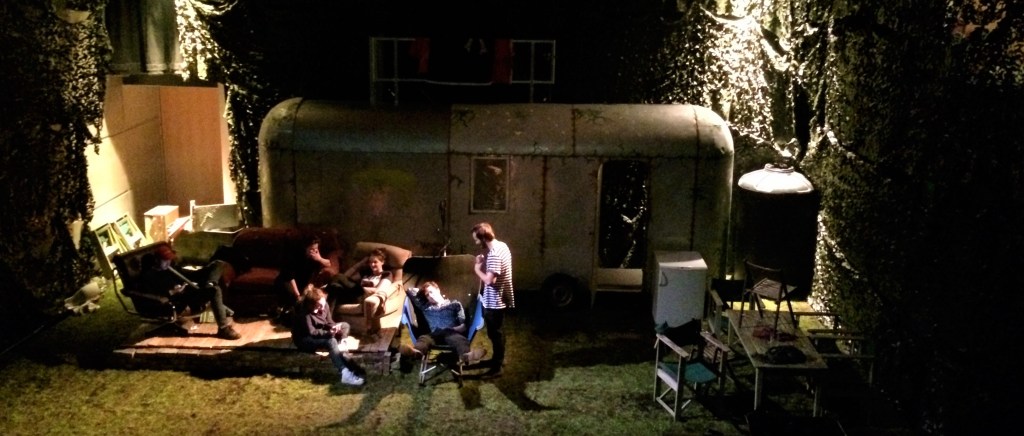
Whilst actors have weeks to rehearse and perfect their parts, the technical team have only a few days to completely transform a venue, and therefore time can be the biggest challenge in set construction. Keeping things simple-to-construct is key, however this does not necessarily mean a simple set. In our production of Jez Butterworth’s Jerusalem, the challenge was in making a set that looked busy and complex but remained relatively simple to construct – with the exception of laying turf into the early hours of the morning – as the majority of the set pieces were created from existing pieces of garden furniture. The major challenge, though, came in putting together a full-sized aluminium caravan in just a few hours, and steel erection has become one of the team’s specialities in putting up large set pieces in a very short period of time.

Sticking within a tight budget encourages simple design, but sometimes you just have to get creative to save money, and this is where the fun begins. To create an old street lamp for Plenty, we attached a cheap house light to a spray-painted scaffold pole, and for ’Tis Pity we raided several members of the production team’s rooms for bookcases and cabinets, as well as borrowing sofas from a college bar.

However great a set concept is, the difficulty is always making it a reality, and in my experience constructing set pieces – particularly large flats and steel platforms – is where things get tricky. The main reason for this is simply finding construction space, especially in student venues. In very few theatres do you have access to a workshop, and living in shared accommodation makes finding somewhere to construct quite difficult, especially in the otherwise tranquil buildings of Oxford. During the construction of the set for Plenty, Andrew and I ended up constructing flats and painting panels around the outside of the theatre in an attempt to find enough space to build such a large number of wooden pieces in very few days, and with no storage besides the stage itself. At one point we had flats in both levels of the theatre foyer as well as in every empty space we could find within the theatre – it was at this point that cast members of another show arrived, and we realised that a matinée performance was beginning in under an hour. The frantic carrying of semi-dry wooden flats up multiple flights of stairs led us to a seminar room, which was subsequently filled with flats and construction materials.

As silly as it sounds, set building is most fun not when it goes right, but when it goes wrong, with the solutions to many problems providing many amusing stories.

With experience building iconic sets in tiny studios – the eerie white ribs and suspended portholes of Endgame in the BT Studio, for example – and wildly ambitious sets for the 180-seat O’Reilly – such as the forest clearing and caravan of Jerusalem and the flying tree of Plenty – Alex was a key member of the technical teams on Endgame, ’Tis Pity, Othello, Jerusalem, Plenty and Citric Acid.

The challenge of shooting theatre

by theatre photographer, Ollie Robinson

Tis Pity

Theatre photography above all else lures you in. A meticulously constructed environment, designed specifically to be seen, populated by thespians keen for (let’s admit) edgy social media glory. Theatre work is nowhere near as frustrating as capturing the split-second glory in sports, or avoiding the spilled Jägerbombs at events. But still, the stage is a mixed bag. I could even talk about the times I dodged pyrotechnics, or the shrapnel from an exploding mug, but I don’t like to be called a hero…

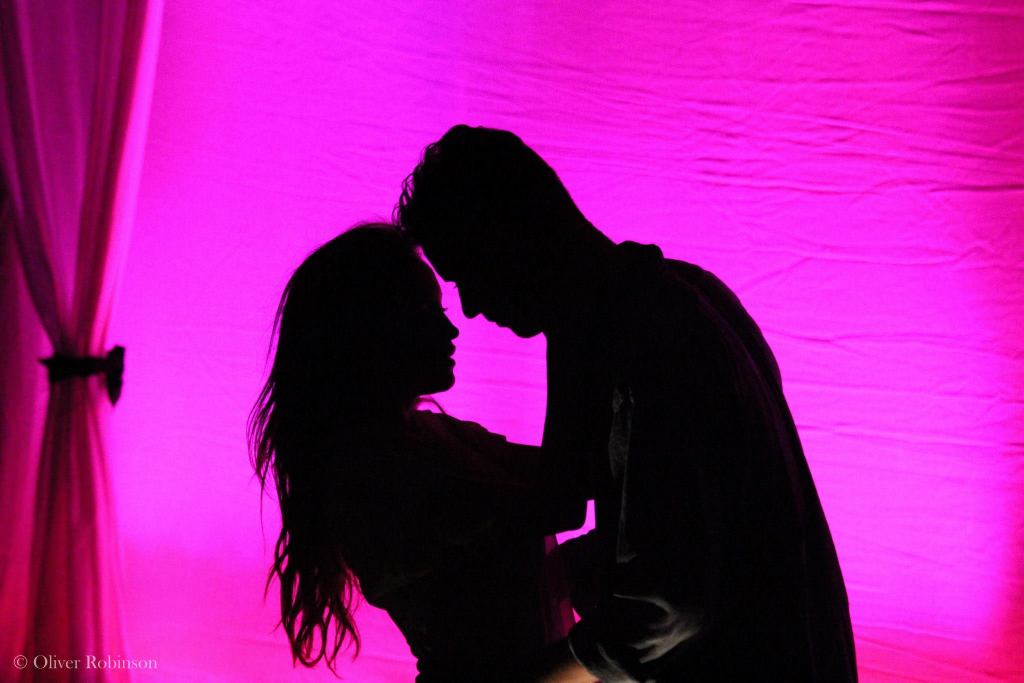
Time is the first illusion. Shooting an hour long play should fit in easily around all the other work I definitely should have already done, but a dress rehearsal running on time has yet to be documented. So it helps to either to have the virtue of patience, or to have already started that essay on the virtues of Plato due at the same time. Light is almost as unpredictable, since without flash most cameras give up, especially when the actors are lost in darkness or swallowed by blinding psychedelic pink. The miracle of a wide aperture prime lens is something I learned one play too late, since actors staying motionless long enough not to blur is uncommon in a play most likely to be about sex and stabbing. But when the camera sensors can pick up enough light, theatre shots can turn out some of the best, having dramatic illumination while being more dynamic than the poses of fashion photography.

The theatre experience itself is surprisingly enjoyable through a lens. The nearness of the actors makes it easy to get absorbed: several captivated minutes have definitely passed when I was just watching through the viewfinder without remembering to actually take pictures. Pretending to be professional in a student environment also gives a welcome excuse to creep further onto stage. Getting in close gives a flexibility of perspective and raw pixel quality that can set photos apart, although it’s still unknown whether the actors’ lack of complaints is from their professionalism or for their love of a good profile picture.

But even with the occasional challenges, theatre photography is a great way to hone the skill of managing extremes of light, while still feeling the atmosphere of an excellent performance. Even when the actors share your photos with added speech bubbles: who says culture is dead?

Ollie was production photographer for Commensal’s ’Tis Pity and Jerusalem, as well as Hexagon Theatre’s Othello and Plenty, and starred in the RadCam Pictures film James. He earned a degree in Philosophy and Theology from the University of Oxford at the same time, and his services can be found at www.oliverrobinsonphotography.com.

Radcliffe Camera Pictures established

Radcam board

The production group behind James, Radcliffe Camera Pictures, becomes officially established today as papers are filed with Companies House to complete its registration. Although the theatre teams Commensal, Hexagon and Koma Kino – under whose umbrellas a half dozen recent plays operated – are both registered societies, this film-centred organisation becomes the first in our Creative Venture portfolio to be fully registered as a company.

From a commercial point of view, company registration brings a number of benefits, including easier access to insurance facilities, eligibility for a wider range of funding sources and grant opportunities, and a legal personality capable of protecting its staff and intellectual property. It also gives the chance for a fresh start from an organisational perspective, and producer Andrew Hall intends to be much clearer about divisions and sections within this new business, creating space for greater accountability, efficiency and results. An example is the company’s writing programme, which remains in character a working group of flexible membership, but can now set a clear agenda under the company umbrella, while RadCam pursues its own productions and development on alternative media projects without infringing on its writing staff.

Working groups are key to the new company structure and ethos, and although the overall brand is committed to a focus on film for the present, this structure also allows plenty of scope for continued support of theatre ventures, especially as the newly-created Koma Kino (Citric Acid) means the team retain a foothold in the Oxford theatre scene despite a central move to London. Within RadCam, groups are dedicated to new writing, television projects, film production and community ideas; each group has a rotating chairperson and a flexible staff, with funding applications made on behalf of each group by the central company. Since so much of the team’s current work can be undertaken remotely (rewriting Tantamount to Treason, Koma Kino plays in Oxford and new Revue projects) this system also allows for easy recruitment of new talent and regular rearrangement of personnel depending on shifting projects.

With four writing projects soon to be announced, a web-series, a short film and a major theatre project all on the company’s books for spring 2016, everyone at Radcliffe Camera Pictures is excited for the New Year.

Tantamount presses ahead

Tantamount banner

Building on the world established in the original, Seattle True Independent Film Festival-selected short Tantamount To Treason has been a background project for Andrew Hall and his production team since the film’s debut in 2012. The original ten-page screenplay spawned an expansive concept for a web series of three 15-minute episodes, spanning continents and history as it explored the web of lies and difficult truths of the three main characters. Involvement and discussions with the cast, Richard Lott, Dom Nolan and Chris Winter, and DP-editor Ashley Hughes, have been ongoing while each pursues their own endeavours around the world in recent years.

Taking that screenplay, drafted shortly after the completion of the student short, the team are pleased to be working now with a reworked, redeveloped and largely rewritten plotline covering three longer episodes, proposals to re-shoot the original film – now treated as a pilot into the series – and a much wider array of characters. With the involvement of Radcliffe Camera Pictures for initial development in the New Year, original cast members Richard Lott and Dom Nolan are meeting writer Andrew Hall later this month for the first table reading of the screenplay, an essential part of the writing process in refining dialogue and the tone of each scene. Joining the team by video link from Australia is actor Chris Winter, a complexity appropriate to his character in the series: a shadowy foreign intelligence director.

It has yet to be confirmed whether the crew will remain similar to the original production, with discussions slated for January on whether Andrew would return to direct the project, the possible appointment of a London co-producer, and an expansion on the cinematography team to enable the production to shoot with multiple cameras. This latter development would offer a major boost to the scripting, which is set in a world littered with the visual language of Bourne director Paul Greengrass, and the style of Jon Cassar’s work on 24. Watch this space.